Luxury travel planning for couples should feel easier. You have the budget, the time and finally have the freedom to do it right. Yet the trip still ends up feeling rushed.
So something is off.
What I see over and over is this. Couples plan these incredible trips across multiple destinations. Italy, France, Spain. Or a mix of cities, tours, and experiences packed into ten days. On paper, it looks efficient. In reality, it creates constant movement and pressure.
And that pressure shows up quickly.
You wake up early, follow a schedule and move from one place to the next. By day four or five, the trip starts to feel like something you are trying to keep up with. Instead of feeling relaxed, you feel like you are managing it.
This is the mistake most people never see coming.
The real reason luxury travel planning for couples feels exhausting
Most people assume the problem is travel itself.
They blame flights, jet lag, or time differences. Those things matter, but they are not the core issue. The real issue is how the trip is structured.
Here’s what usually happens.
You plan around coverage. You want to see as much as possible. So you add more stops, more activities, more reservations. Each decision feels small. Together, they create friction.
Packing and unpacking takes time. Checking in and out takes time. Transportation between places takes time. Each of those steps quietly removes space from your trip.
And that space is what creates the feeling of calm. Without it, the trip starts to feel tight.
What a non-rushed trip actually looks like

Now let’s flip it.
A well-structured trip does not feel empty. It feels intentional. You stay longer in one place. You build your days around how you want to feel, not what you want to check off.
For example, take a look at how a food-focused trip can be structured in this article:
Fall in Love with Buenos Aires Culinary Travel
In that kind of trip, the experience builds over time.
You return to the same neighborhood and you settle into a rhythm. Instead of rushing between highlights, you start to experience the place itself.
That is the difference.
You are not doing less. You are actually experiencing more.
The tradeoff most couples miss
This is where the real decision sits.
Every time you add another destination, you gain variety. At the same time, you lose depth. That tradeoff is not obvious when you are planning.
It only becomes clear once you are in the middle of the trip.
Here’s a simple example.
A couple plans three cities in nine days. That gives them three full days per location. After travel time, it often becomes two and a half. After settling in, it feels closer to two.
Now compare that to one base with day trips.
You remove most of the packing, most of the logistics and you gain time back. And that time shows up as energy.
That is the shift from chaos to control.
Luxury travel planning for couples and the Control vs Chaos Filter
Here’s where everything starts to change.
Most couples approach luxury travel planning for couples with one goal. Fit as much as possible into the time available. That feels logical at first. You want to maximize the trip.
But that approach creates the exact problem you are trying to avoid.
So instead of adding more, you need a filter.
I call it the Control vs Chaos Filter.
Every decision you make either creates calm or creates friction. There is no neutral choice. Once you see that, planning becomes much clearer.
What the Control vs Chaos Filter actually means
The idea is simple.
Before you add anything to your trip, you ask one question. Does this make the trip feel more controlled or more chaotic?
A controlled decision gives you space. It reduces movement, simplifies your day and makes the trip feel easier.
Here’s a real planning example.
Adding a second hotel for a two-night stay might seem like a good idea. You get to see another area. At the same time, you create packing, transport, and adjustment time. That entire process removes hours from your trip.
So the better decision is often staying put and exploring deeper.
There is one belief that drives most bad itineraries.
That is control.
The belief that breaks most luxury trips
But it breaks down in real life.
More experiences equal a better trip.
It sounds right., feels productive and looks good when you are planning.
That approach challenges the idea that doing more improves the experience. Instead, it shows how fewer, well-placed experiences create a stronger trip.
More experiences mean more scheduling. More scheduling means less flexibility. Less flexibility means less enjoyment.
So what you end up with is a trip that looks impressive and feels exhausting.
A good example of this shift is shown here: The Truth About Luxury Machu Picchu Travel
They compare Italy to France, debate Spain versus Portugal and look at lists of top places to visit.
That is the mindset shift.
You can take the same destination and create two completely different trips
.
Why structure matters more than destination
Most people spend their energy choosing destinations.
The structure is.
But the destination is rarely the problem.
Same place. Different outcome.
One version moves quickly. It follows a tight schedule. It tries to fit everything in. That version feels rushed.
The other version slows down. It limits transitions. It builds space into each day. That version feels calm.
This is where the Control vs Chaos Filter becomes powerful.
It gives you a way to design the experience, not just choose the location.
Luxury travel planning for couples in the Douro Valley vs river cruise
This is where the Control vs Chaos Filter becomes very clear.
At first glance, a river cruise sounds like the easiest option. Everything is planned. You unpack once. You move between destinations without thinking about logistics.
That feels like control.
But once you look closer, you start to see where the friction comes in.
You are locked into a schedule, follow fixed excursion times and move with a group. Your days are structured for efficiency, not for how you want to experience the place.
So even though the logistics are simple, the experience can still feel rigid.
Where river cruises create hidden friction
Let’s walk through a typical day.
You wake early, eat on schedule, and join group excursions at set times. You return on schedule and prepare for dinner within another fixed window.
Each step is organized. At the same time, each step removes flexibility.
That is the tradeoff.
You gain convenience. You give up control over your pace.
For some travelers, that works. For others, it creates a subtle pressure that builds throughout the trip.
You are not deciding how your day flows. You are following it.
The Douro Valley private stay alternative

Now compare that to a private stay in the Douro Valley.
Instead of staying on a boat, you stay at a vineyard estate. Wake up when you want, decide how your day unfolds and schedule private tastings based on your energy, not a group timeline.
That single change shifts the entire experience.
Here’s what that looks like in practice.
You spend the morning on the terrace overlooking the river, have a late breakfast, maybe visit a nearby winery for a private tasting and return when you are ready, not when a schedule tells you to.
That is control.
You still experience the region, just do it on your terms.
You might even want to consider doing a Private Douro Valley Winery tour with lunch and a river cruise.
Structured travel done right
This is where many people misunderstand structured travel.
They think structure means everything is planned down to the minute. In reality, the best structure removes pressure, not adds to it.
A well-designed trip still has a plan. It just builds in space.
You can see a similar approach in this article: Luxury Greece Cruise: Secrets of the Aegean
In that case, the experience focuses on flow rather than overload. You move through the trip without constant transitions. You enjoy each stop without feeling rushed.
For another perspective on this part of the trip, Europe Travel Itinerary Planning: The Better Way to Structure Your Trip explains how to build a European itinerary with fewer rushed moves and more time to enjoy each stop.
That is the key distinction.
Structure should support the experience, not control it.
Luxury travel planning for couples in Piedmont vs Tuscany
This is one of the clearest examples of volume versus depth.
Most couples planning luxury travel planning for couples start with Tuscany. It is well known as the the obvious choice and it shows up in every list of must-see destinations.
So they build a trip around it.
They add Florence or Siena, they add day trips or winery tours. The itinerary starts to grow quickly.
And that is where the problem begins.
Why Tuscany often turns into a checklist trip
Let’s look at how this usually plays out.
You stay in one town for two nights. Then you move to another area. Then you add a third stop. Each location has its own list of things to see.
So each day becomes structured around covering those highlights.
You are moving from one site to another, navigating traffic. You are working around reservations. Even meals start to feel scheduled.
That creates a checklist pattern.
You are seeing a lot. At the same time, you are not settling into any one place long enough to enjoy it fully.
That is the tradeoff.
You gain variety. You lose depth.
How Piedmont changes the experience
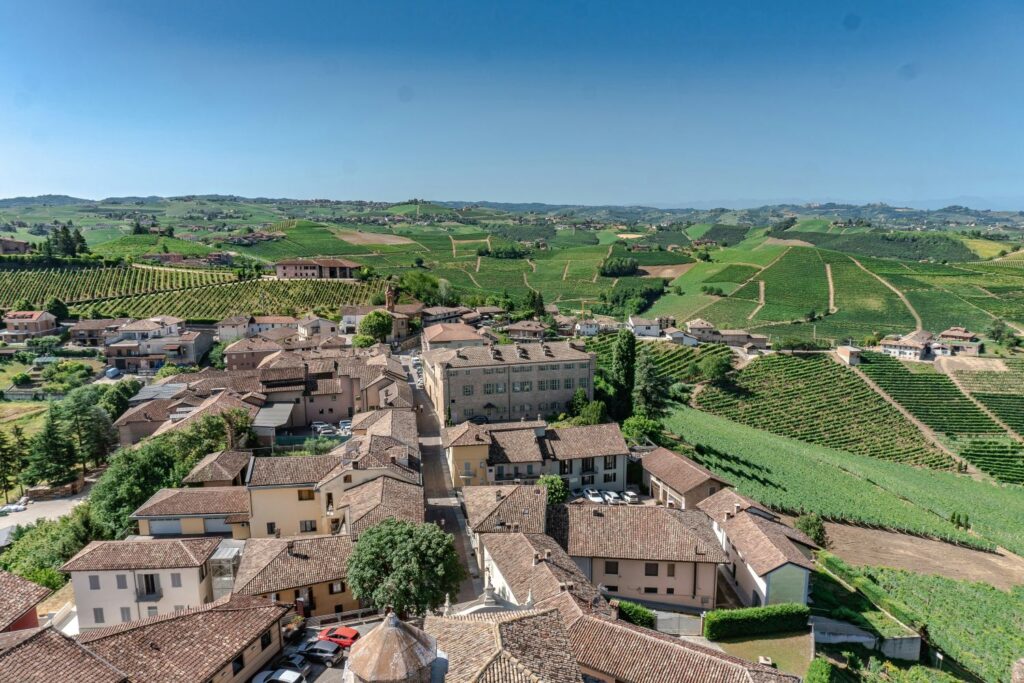
Now compare that to Piedmont.
It is less crowded. It is less talked about. That alone changes the pace of the trip.
Instead of moving between major tourist centers, you choose one base. A small town near Alba or Asti works well. From there, you explore the region slowly.
Here is what that looks like.
You spend the morning at a local market, take a long lunch at a family-run restaurant. Maybe visit a nearby vineyard in the afternoon. You return without feeling rushed.
You repeat that rhythm with variation each day.
That creates familiarity. It creates comfort. It allows the experience to build.
That is depth.
Why not experience a private Langhe wine tour?
A better model for structured travel
This is where the Control vs Chaos Filter becomes practical again.
Tuscany is not the problem. The way it is usually planned is.
If you apply the same slower approach to Tuscany, the experience improves. If you apply a rushed approach to Piedmont, the experience declines.
So the destination matters less than the structure.
You can see this approach reinforced in this article: Lake Como Cultural Experiences You’ll Fall in Love With
In that example, the focus is on staying in one place and experiencing it fully. The trip builds through repetition and familiarity instead of constant movement.
That is the shift most couples miss.
You do not need a different destination. You need a different approach.
Luxury travel planning for couples in San Sebastian private vs group tours
This is where experience quality becomes very clear.
San Sebastian is known for food. That draws people in quickly. So most couples planning luxury travel planning for couples start the same way. They search for food tours, book group experiences and assume that is the best way to access the local culture.
You can explore this idea in more detail in The Best Luxury Tuscany Travel for Couples Who Love Food, Wine, and Culture, including how couples can combine Tuscany’s food, wine, villages, and culture without turning the trip into a race.
It feels efficient. But this is where the structure quietly shifts toward chaos. What about enjoying a day trip to Biarritz?
Why group tours limit the experience
Let’s walk through what a typical group food tour looks like.
You meet at a set time, move with a group and follow a fixed route. Each stop is timed. Each experience is shortened to fit the schedule.
That creates consistency. It also creates limits.
You cannot stay longer at a place you enjoy, can’t skip something that does not interest you and cannot adjust the pace of the evening.
So even though the experience is well organized, it is not flexible.
That is the tradeoff.
You gain access. You lose control over how the experience unfolds.
What private access actually changes
Now compare that to a private guide or a self-directed evening with the right structure.
Instead of following a group, you move at your own pace. You choose where to linger. You adjust based on how you feel in the moment.
Here is what that looks like in practice.
You start light, take your time, and move only when you’re ready. You linger where it feels right and skip anything that doesn’t.
That creates a completely different experience.
The same city feels calmer. The evening feels natural. The food becomes something you enjoy, not something you move through.
That is control.
The tradeoff most people overlook

Many couples assume group tours are the safer choice.
They think they will miss something without a guide. They worry about not knowing where to go.
But what they miss is this.
The cost of a group tour is not just money. It is the structure that comes with it.
You are paying for someone else’s timing, a fixed route. and a preset experience.
In contrast, a private approach or a lightly guided plan gives you flexibility.
You still have direction. You just are not locked into it.
That is the difference between being led and being supported.
Luxury travel planning for couples and how to structure your trip the right way
Now we bring everything together.
At this point, the pattern should be clear. Luxury travel planning for couples does not fail at the destination level. It fails at the structure level.
So instead of asking where to go next, you need to ask how the trip should flow.
That shift removes most of the confusion.
Start with the base, not the list
Most couples start by building a list.
They pick cities, pick experiences and start stacking options. That creates pressure before the trip even begins.
A better approach is starting with a base.
You choose one primary location for a stretch of the trip. That becomes your anchor. From there, everything expands outward.
Here is a simple structure.
Four nights in one location. Day trips built around it. One or two key experiences placed intentionally. Open time left between them.
That creates rhythm.
Instead of constantly adjusting, you settle in.
Limit transitions to protect your energy
This is the most practical rule you can follow.
Every transition costs more than it looks like on paper.
Packing takes time. Travel takes time. Getting oriented takes time. That entire process can remove half a day.
So if you move three times, you lose more than a full day of your trip.
That is the tradeoff.
You gain variety. You lose time and energy.
The better structure is limiting those transitions.
Two locations instead of four. Longer stays instead of short stops. Fewer resets throughout the trip.
That is what keeps the experience feeling smooth.
Build space into every day
This is where most itineraries break down.
People fill every block of time. They schedule morning, afternoon, and evening activities. It looks efficient and productive.
It removes flexibility.
Here is a better structure.
One anchor experience per day. Everything else stays flexible.
If the day unfolds naturally, you add something. If you feel like slowing down, you keep it light.
This creates breathing room.
And that breathing room is what turns a trip into something you actually enjoy.
Luxury travel planning for couples and making the right decision
At this point, the decision becomes much simpler.
You are not choosing between destinations. You are choosing between two ways of traveling.
One approach is built around coverage. It focuses on seeing as much as possible. It creates movement, structure, and constant transitions.
The other approach is built around experience. It focuses on how the trip feels. It creates space, rhythm, and control.
That is the real decision.
The two paths side by side
Let’s make this practical.
A coverage-based trip looks like this.
Multiple cities in a short time. Early mornings. Tight schedules. Frequent transitions. A focus on highlights.
An experience-based trip looks different.
Fewer locations. Longer stays. Flexible days. Intentional pacing. A focus on depth.
Both trips can cost the same.
They will not feel the same.
The outcome most couples actually want
When couples think about a great trip, they rarely describe a list.
They describe how it felt.
They talk about a relaxed morning. A long meal. A place they returned to more than once. A day that unfolded naturally.
Those moments do not come from doing more.
They come from having space.
That is what the Control vs Chaos Filter protects.
It removes the decisions that create pressure. It keeps the ones that support the experience.
What to do next
If you are planning a trip right now, take a step back.
Look at your itinerary. Not for what it includes, but for how it flows.
Ask one question.
Does this feel controlled or chaotic?
If it feels tight, it will feel tighter when you are in it.
If it feels calm, it will feel even better once you arrive.
That is the signal you should trust.
And if you want help structuring it the right way, come join the Facebook group.
That is where I walk through this step by step and help you turn a good trip into the kind of trip you actually remember.